

The Unexpected Kindness of God
Strong Steve is the rough translation of a popular Hungarian cooking paste: Erős Pista. My husband had been gifted a jar by a colleague who had discovered this amazing sauce on a trip and out of thoughtfulness was giving us the mild version. Having been in the cupboard for a while, it was high time I gave it a whirl!
I fried up veg, added leftover chicken, threw in the jar of sauce, heated through and served with rice. So simple and tasty.
Well yes, it seemed simple and it was ‘tasty’ – but in a mouth-exploding, salt-overdosing fiery kind of way! It was not good. No, it was very, very bad!
And to think that it had come so highly recommended by my husband’s colleague! He had brought extra to share the joy with friends. How could he sing its praises when to anyone with any taste buds left it was simply an unbearable assault on the mouth?!
Or perhaps the problem lay with me. It was immediately obvious that I had not cooked it right and I was pretty irritated with myself for being quite so can-do and not actually researching what I was supposed to do. I mean the clues were there. There was a picture of three chillis on the jar. The paste was teeming with specks which looked suspiciously like chilli seeds. But I was not to be deterred by these red flags- or indeed the intensely red paste that was before me. I had been reliably informed that it was the mild one, a quick sniff had proffered an almost sweet smell, and so I unreservedly threw it in. All of it.
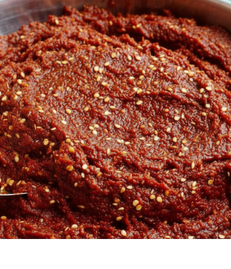
Later, having learned the hard way that this was not a Dolmio stir-in pasta sauce-alike, I googled Erős Pista. A condiment. A paste to add to an already sauce-y dish to give it a hearty kick. A spoonful would suffice – maybe two at a push. The raw peppers within had been carefully prepared “to preserve their intense heat” and moreover, had been “preserved with salt”. It was now only too clear why a whole jar added to a bunch of dry ingredients had produced something so overwhelmingly bad.
And as one who doesn’t enjoy messing up and is perhaps too bothered about doing so, I was keen to redeem this gung-ho cooking flop in some way. My thoughts quickly shifted towards making it an opportunity – how could God teach me something through this? And I thought I knew what God would want to say. It was after all rich in material for a lesson on the folly of rushing into something without bothering to stop and seek counsel.
As I grabbed a pen and started writing, I was confident that it would become a cautionary tale on the need to seek God and His plans before embarking upon one’s own. There is of course great wisdom in doing that, but the tone in my mind was legalistic. I had messed up and deserved a bit of a reprimand – the heart behind it was ‘you weren’t good enough and you need to do better next time – especially if it’s about an issue more important than dinner’. In truth, I was expecting a gentle slap. Gentle yes, but a slap, nonetheless.
Only as I started to write, that’s not the direction it went in at all. Instead, it became an answer to an unspoken question, a better perspective on an unhelpful niggle that had been making itself at home in my heart. It was loving and kind – not a gentle slap but a gentle nudge. In short, it was what my heart needed in that moment.

You see I had been reading Isaiah. Desiring to go deeper in my understanding of God, I had started reading this Old Testament book knowing that it contains beautiful prophetic passages about Jesus and the redeeming heart of God. However, it is a long book and the first half is not warm and fluffy to read, and I had not, as yet, progressed beyond it. It contains messages of severe judgment and woe, calling nations to repent of their sins. So perhaps it wasn’t surprising that my thoughts were predisposed towards a more disciplinary message in response to my culinary clanger.
Indeed, reading these passages was stoking questions about God’s nature – and I could understand why it might be a stumbling block for some on the issue of Him being a loving God. Moments of redemption and hope do appear in the first half of Isaiah, but the themes of God’s judgment and invincible might seem to take centre stage.
It can be a bit uncomfortable. But, as my desire was to learn about the character of God, maybe I would do well to lean into this aspect of Him – comfortable or not.
Cue my botched attempt at Hungarian cooking and the disastrous meal. I already knew that I could have done better and had already observed that in any future endeavour I would do well to seek counsel first, so I don’t think God’s heart was to hammer home that point. No, God had something more life-bringing to say to me in that moment.
What He showed me was that if I had come at the meal prep as someone who knew Hungarian sauces well, that understanding would have guided my cooking and the meal would have tasted good. Those familiar with Hungarian cuisine would have understood that the paste was only a small component – something contributing to the overall offering but by no means the defining element.
Similarly, I had not been approaching the early chapters of Isaiah as someone who knew Jesus well. It was almost as if I had shelved my knowledge of His self-sacrificing love and become unduly focussed on the anger and judgment I saw there, and it had been unsettling. Indeed, the anger and judgment were becoming the defining elements – which like the paste was leaving a very bad taste in the mouth. But God gently reminded me that anyone who has seen Jesus has seen the Father (John 14:9), so I reminded myself of what Jesus did for us – He died. He took all our sin upon Himself. He paid the ultimate price. Are these the actions of a God whose go-to characteristic is anger and vengeance? Assuredly, no.
There is much more that has been said about how the scriptures that speak of doom and destruction fit in together with what we see in Jesus, but this is not the place for that. However, having reflected on verses that speak loudly of His love as being of ultimate importance, I felt real peace in my heart:
“For God so loved the world that He gave His one and only Son, that whoever believes in Him shall not perish but have eternal life. For God did not send His Son into the world to condemn the world, but to save the world through Him.” (John 3:16-17)
I hadn’t really registered how my thinking and image of God was becoming slightly misaligned – it can happen all too quickly, but in His kindness, God showed me.
I had thought I knew what God wanted to say to me – but I was wrong. My heart had needed the reassurance that He is a loving God – and that’s what I got. His compassion in doing that speaks of His astonishing grace – although undeserving, we get freedom and love, not law and thou shalt do better or else!
I suspect that at times, all of us think we know what God would want to say to us, but it’s a really good idea to ask Him, because sometimes we can all get it very, very wrong. He surprised me with His kindness – His response to you might also be just what your heart needs.